
The world’s population is now 8 billion, and many of the 8 billion people live in major cities. These cities contribute the most to greenhouse gas emissions, and yet, at the same time, some of them are pioneering in reducing the ecological footprint on a global scale. We must act now to forge a resilient, fair, and sustainable world and cities are at a disadvantage in trying to make this happen. But some cities are capable of transformative change and they can act as a blueprint for others.
Addressing climate change and fostering healthier environments go hand in hand – so tackling one often means solving multiple issues at the same time. This is good news because it means sustainability efforts also have an economical advantage. Newer and greener technologies help enhancing the quality of life for city dwellers too.
In this article I will share ten cities that shine as beacons of sustainability.

1. Copenhagen, Denmark
Copenhagen often tops the list of the world’s most sustainable cities (as much as Denmark tops the race in countries). Although it did not meet its original goal of becoming carbon neutral by 2025 (it was a very ambitious goal), but it has achieved a 75% reduction in CO₂ emissions compared to 2005 levels and is targeting climate positivity by 2035. This commitment is supported by extensive cycling infrastructure (400 kilometers of dedicated bike lanes), widespread use of renewable energy, and a robust public transportation system. The city’s innovative waste management practices are outstanding, including converting waste to energy Copenhagen uses high-tech recycling systems and waste-to-energy plants (like CopenHill) that convert trash into heating and electricity without releasing odors. The once-polluted inner harbor has been now cleaned up and it’s even safe for swimming.
An important drive behind this green revolution is the high social awareness among residents.

2. Amsterdam, Netherlands
Currently ranking as number one, as the world’s most sustainable city according to Arcadis Sustainable Cities Index. Amsterdam is renowned for its exceptional cycling culture (they have been building it since the 1970’s!), with over 50% of residents using bicycles as their primary mode of transport. When I visited Amsterdam, I remember hardly seeing any cars even in the small hours of the morning, people just cycled home from clubs. Unbelievable. The city is continuously investing in green buildings, renewable energy, and urban green spaces. They aim to become completely emission-free and have all traffic within the A10 ring road emission-free by 2030 and by 2050 they want to become the become the world’s first fully circular city, meaning recycling everything and not using virgin materials. How much I love this? Absolutely. They are also trying to tackle their emissions apart from the other ambitious sustainability plans and target an 80% share of energy from solar and wind.
New parks and green corridors to reduce air pollution and urban heat, as well as keeping newly builds meeting with needs but within planetary boundaries.
3. Stockholm, Sweden
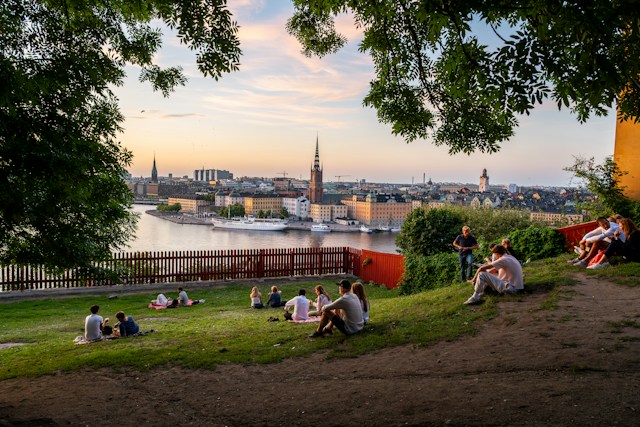
Stockholm is a pioneer in sustainable urban planning, recognized globally for its ambitious environmental policies. The city aims to be climate-positive by 2030, fossil-fuel free by 2040. Stockholm has an extensive metro, bus, and rail networks running largely on renewable energy and low-emission fuels. The city has implemented a congestion tax to reduce traffic and promote public transit use. The have a Climate Action Plan, that focuses on 5 areas including a just transition, climate-positive energy systems, fossil-free transport, circular building practices, and low-impact consumimption. This is all have been planned out well, working strategically for decades to reduce the city’s impact.
Stockholm also built extensive green spaces paired with commitment to preserving urban biodiversity. Which is a very interesting entity, in my view, and refreshing to see the change.
Just like in Amsterdam and Copenhagen, Stockholmers also play an important role in climate and environmental work and take part and pride in their city’s efforts. (Without this, though, in my opinion, very little can happen. Citizens must be educated and committed to be part of this.)

4. Vancouver, Canada
Vancouver is branded as the ultimate “No Fun City” and frequently ranked among the most beautiful cities in the world simoultanously. Vancouver aims to become the greenest city in the world by 2020, and while that goal was not met, the city continues to make significant progress. Currently, Vancouver is doing exceptionally well with green spaces (119 square meters of green space per citizen), high reliance on renewable energy (98% of its energy from renewable sources), and progressive urban planning. Vancouver’s public transit system encourages residents to opt for eco-friendly transportation methods, making sustainability integral to urban life.
Vancouver plans to have all new construction use only renewable energy by 2030 and working toward becoming completely “zero-waste” by 2040.

5. Singapore
Singapore excels as a model of urban sustainability, even though it’s a very densely populated city, with long-term strategic planning and technological innovation on the main stage. The city-state invests heavily in green roofs, vertical gardens, green roofs and sustainable drainage systems. The Singapore Green Plan 2030 mandates this. Also part of this plan, they want to reduce household water consumption to 130 liters per capita per day and Increase solar energy deployment to at least 2 GWp.
Singapore is widely recognized as a “City in a Garden” and transitioning toward a “City in Nature”. Iconic spaces like Gardens by the Bay feature solar-powered supertrees and cooled conservatories.
Singapore employs a diversified “four national taps” strategy: local catchment water, imported water, high-grade reclaimed water (NEWater), and desalinated water.

6. Curitiba, Brazil
This Brazilian city could be the most interesting on the list, if you visit Curitiba, you can see how one of the first cities planned for a more sustainable future have been functioning for 60 years. Since the 1970’s, Curitiba is a globally recognized pioneer in sustainable urban planning. Often cited for its innovative public transportation network (radial linear-branching pattern to divert traffic from the city centre and protect green areas), featuring dedicated bus lanes and an efficient transit system designed to reduce car dependency. Founded Curitiba Industrial City (CIC): they built it on the west side with strict environmental regulations to create jobs while protecting air quality. They even pioneered in landfill management: with methane capture technology at landfills that is used to generate energy.
7. Freiburg, Germany
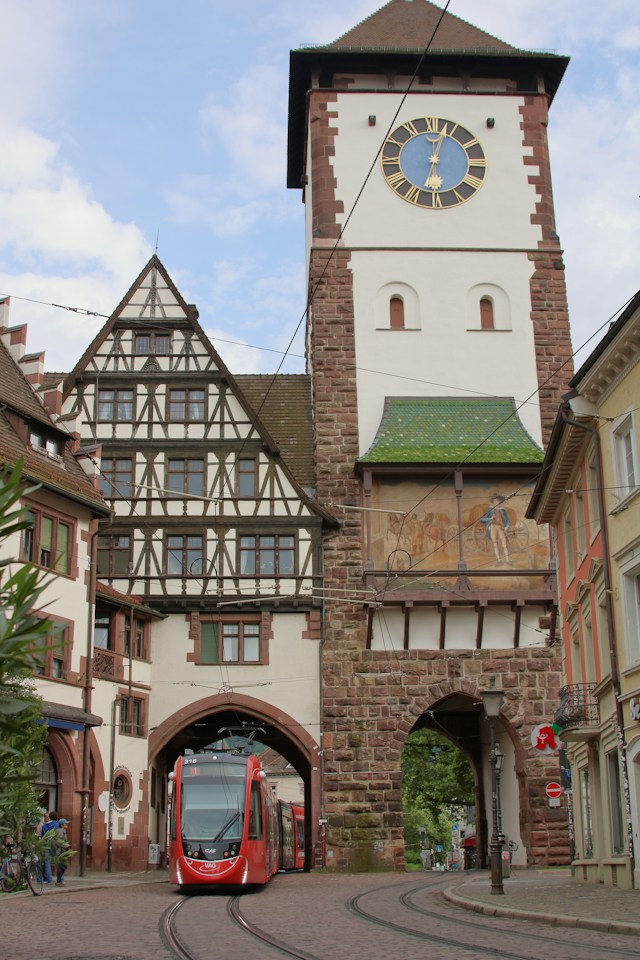
Freiburg is a shining example of sustainability in action, similarly to Curitiba, it’s driven by decades of grassroots environmentalism and progressive municipal policy. The three big pillars of change have been public transport, renewable energy since 1986 (Freiburg is known as Europe’s “solar city”), and eco-friendly building designs. The city prioritizes solar energy, aiming to be self-sufficient in energy by 2050. Its commitment to pedestrian-friendly urban design (an integrated tram network ensures that 70% of residents live within 500 meters of a stop) and extensive bike paths (400 km of it) make this city en excellent example of green infrastructure.

8. Hamburg, Germany
The former European Green Capital (2011), renowned for large-scale climate innovation, green architecture, and public transit integration (nearly all residents have access to public transit within 300 meters of their homes and extensive cycling infrastructure). Hamburg’s Climate Plan sets sector targets and a legal framework to reach climate neutrality by 2045. It was Germany’s first city to introduce diesel-restriction streets to tackle NOx. The Hamburg Green Hydrogen Hub is building a 100 MW electrolysis plant for green hydrogen at a former coal-fired power plant. Plus a comprehensive city-wide mandate and incentive program to cover rooftops with vegetation to reduce urban heat and manage rainwater.

9. Oslo, Norway
Oslo is a global leader in urban sustainability, aiming to reduce greenhouse gas emissions by 95% and become a carbon-neutral city by 2030 and a zero-emission city by 2050, with efforts focusing on incentivizing electric vehicle use and transforming its public transport system. They introduced the world’s first city climate budget in 2016, to Introduced in 2016 as the world’s first city climate budget, to track carbon dioxide emissions. They are testing Carbon Capture and Storage (CCS) from waste incineration. Oslo is a world leader in electric vehicle adoption, 90% of new car sales in 2024 were electric. Also their public transit fleets utilize renewable energy sources.
What also really stand out for me, is how Oslo is becoming circular. Household waste has decreased from 2019 to 2023, paired with reuse facilities that distributed over 1,500 tonnes of secondhand items.

10. Tokyo, Japan
Tokyo is the world’s largest metropolis yet demonstrates admirable commitment to sustainability. A smart city is not considered smart if it is not green – not in Japan, anyway. The city integrates smart technology into infrastructure, promoting energy efficiency and advanced waste recycling programs. A mandate aiming for net-zero carbon emissions by 2050, that includes the “Carbon Half” target to cut greenhouse gas emissions by 50% from 2000 levels by 2030, alongside raising renewable electricity use to roughly 50% has been in plcae for years.
Significant investments in public transportation make this densely populated area more livable with 80’000 Ha of Tokyo are being green, natural parks.
These ten cities exemplify what is possible in terms of urban sustainability. Their innovative approaches provide valuable lessons for other cities striving to become more sustainable.
The journey to sustainability may be ambitious, but with the right mindset and initiatives, cities can transform themselves into models of progress, resilience, and inspiration for the entire globe. Each city serves as proof that sustainability is not just a goal; it is an achievable reality when communities work together toward a common purpose.
Related Posts


7 Awesome Reasons To Visit Ohio
Ohio is situated just below Lake Eerie between Indiana and…
10 Peaceful Places in the UK to Escape To
I noticed lately, that many people are looking to…